
On November 11, while plenty of our colleagues were working the KubeCon floor in Salt Lake City, more than 60 people squeezed into The Storey in London’s Liverpool Street to chew over the question printed on the invite: AI is everywhere. At what cost?
It was the launch night of Tech-Baithak London. (A baithak is a sitting room in Hindi, or the gathering that happens in one.) Yash Gorasiya, Harshit Satsangi and Joydeep Das organized it with community partner Indian Professionals in London, and Spectro Cloud signed up as venue partner. In practice, that meant the room, the drinks, a lot of pizza — and four big banners placed so you couldn't get from one room to the next without passing one.
Subtle, we are not.
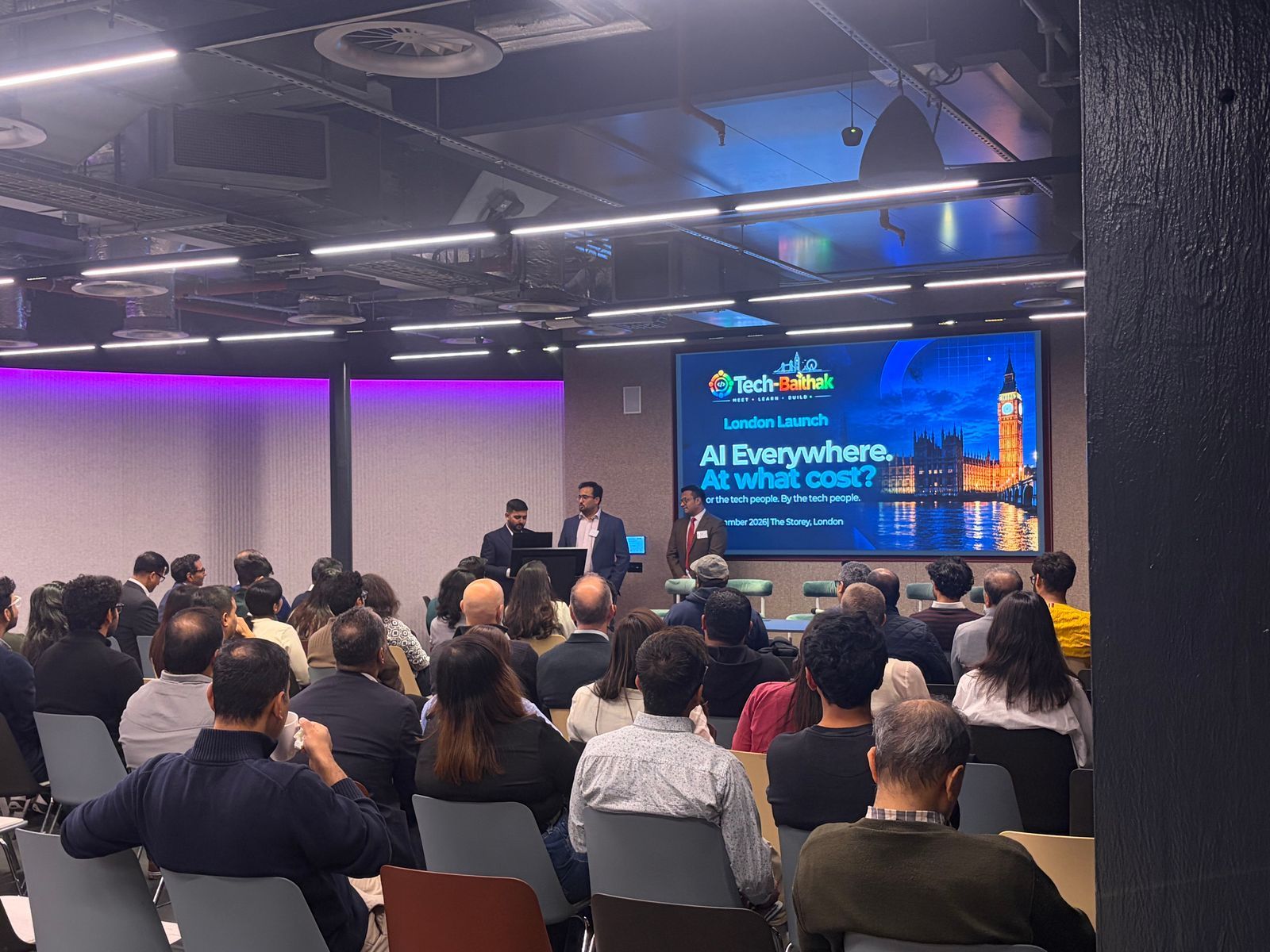
By our count of the registrations, about nine in ten were experienced engineers and technology leaders, with some people at the start of their careers too. They came from consultancies including Accenture, Capgemini, Deloitte and Wipro, from Fitch Group, Mastercard and SMBC Group on the financial side, and from tech recruiters Harvey Nash and Hamilton Barnes.
Conversations around the room were deliciously varied, but comparing notes today some themes stood out: jobs, skills, cost and accountability.

AI skills are starting to outrank years of experience
Ankur Anand, group CIO at Harvey Nash, brought his company's own numbers on AI adoption. The push to adopt is accelerating. But the investment often isn't backed by a plan for changing how the business works, which makes it hard to say what the money is buying.

Then he turned to hiring. Employers are increasingly choosing candidates for AI skills over experience.
The real example our team were pinging about in Slack this morning: an engineer with two years' experience and AI certifications getting the job over one with five years and no formal AI training. Expect new job titles to follow. Expect a lot more AI certification badges in your LinkedIn feed, too.
The people running production still don't trust the output
Trupti Kolekar, founder and CEO of OpsCortex Labs and a site reliability engineer, came at it from the other direction. AI can't be trusted yet, she argued, and its hallucinations have to be caught by a human before anything goes out to market.
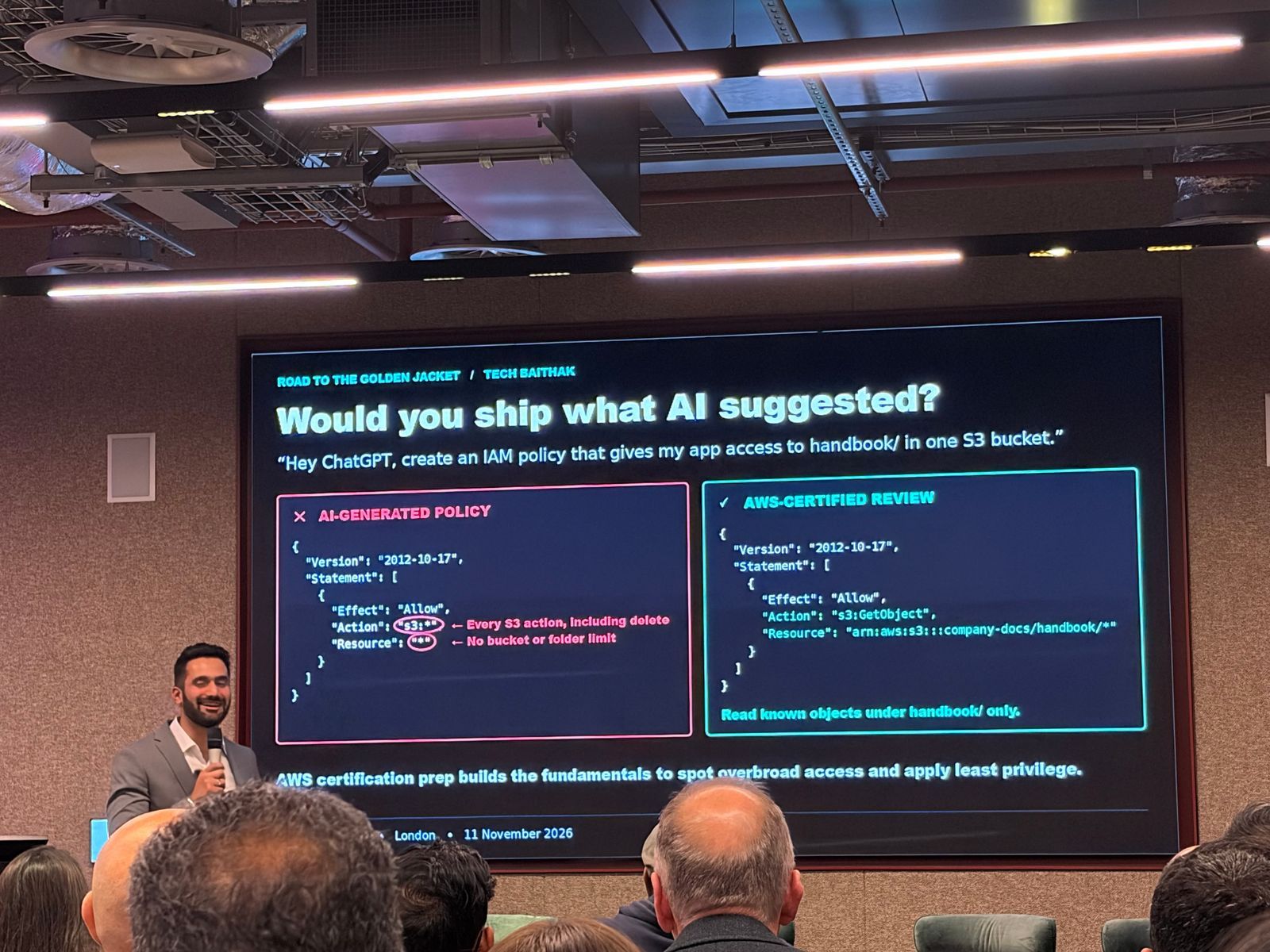
Put her talk next to Ankur's and you get the evening's unresolved tension. Employers are rewarding AI credentials over years on the job — while the people responsible for production say AI output still needs an experienced eye before it ships.
If experience counts for less at hiring, who's doing the checking in five years? We didn't hear a confident answer on the night, and we won't pretend to have one.
Ed Owen on why cheaper tokens are making AI bills bigger
Our own Ed Owen, global MSP director at Spectro Cloud, took the event's ‘cost’ question literally. His talk, "Cheaper tokens, bigger bills," opened with a promise of no hard sell and a slide of blanks for the room to guess at.
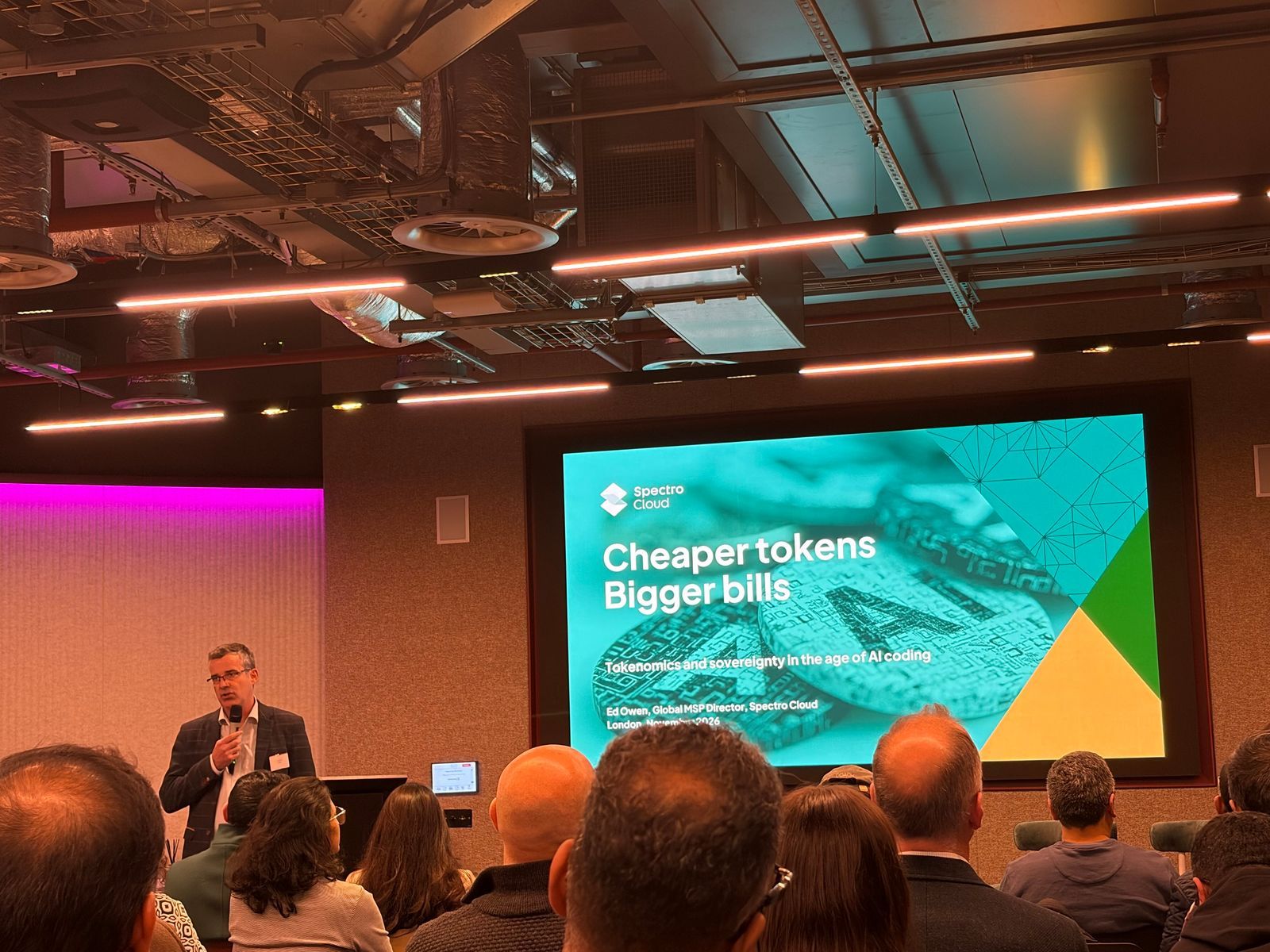
The answers? The price per token has fallen roughly tenfold in about a year, while enterprise spending on generative AI more than tripled, from $11.5 billion to $37 billion. Anthropic's own guidance puts typical Claude Code use at $150 to $250 per developer per month, and heavy agentic use at $500 to $2,000. Gartner expects AI coding costs to overtake the average developer's salary by 2028.
So much for cheap tokens saving the budget.
The second half of the talk was about where your data goes. Every request to a hosted model sends your prompt, your context and often your source code outside your perimeter. Put a hosted router in front to save money and it passes through two outside parties — the router, then the model provider. The EU AI Act's high-risk obligations have applied since August 2, with top penalties of €35 million or 7% of global turnover, so Ed argued that sovereignty is now a cost question as much as a compliance one.
The cheapest way to keep data in the building is to run the model in the building.
Ed laid out three ways to give developers AI. Stay on frontier APIs, and you're metered forever with your code leaving the building. Build a private stack yourself, and you've taken on Kubernetes, vLLM, GPU drivers, metering, quotas and Day 2 patching. Or run open models locally behind a gateway that enforces policy on every request, and burst to a frontier model only when that policy allows.
That third option is what we built PaletteAI Inference Launchpad for, the foundation for AMD’s Instinct Coder hardware appliance. And the timing of the London event was perfect: we just launched the latest iteration, the AMD Instinct Coder 355, for even more coding power.
New York asked the same question about banks
The accountability thread will sound familiar if you caught our panel in New York in September. At AI for Financial Services, hosted by Ignite Community with Supermicro and AMD, our CEO Tenry Fu joined American Express, Silicon Data and Data Maverick to talk about AI ROI and token economics. Shipali Jangra of American Express argued that a decision that isn't trustworthy and auditable delivers no business outcome, whatever you spent on it.
Trupti could have said the same thing in Liverpool Street.
For banks, Ed's cost problem starts with agentic coding. JPMorgan's global CIO has said coding assistants account for the majority of the bank's token spend. And in a regulated firm, switching to a cheaper model is still a model change your risk function will want evidence for. We went through how to handle both in Banking on tokenomics.
Next up, we're recording an on-demand panel for UK financial services on the question both cities asked, albeit in different words: which AI workloads should you rent, and which should you own? Watch this space for more details.
Why a Kubernetes company pays for the pizza
Although we’re a commercial software company, we like to say we have an open source soul: we’re paid-up members of the CNCF, LF Edge, the Agentic AI Foundation and the OpenSSF, and lead sponsor of the CNCF Sandbox project Kairos. The same week as Tech-Baithak, we were a platinum sponsor at KubeCon North America.
Community nights like these are so, so important to the health of our industry. They’re where we hear what engineers worry about before it turns up in an RFP — from people who aren't in a sales cycle with us. And yes, we hope some of those conversations turn into customers one day. We'd be fibbing if we said otherwise. But that’s certainly not all it’s about.
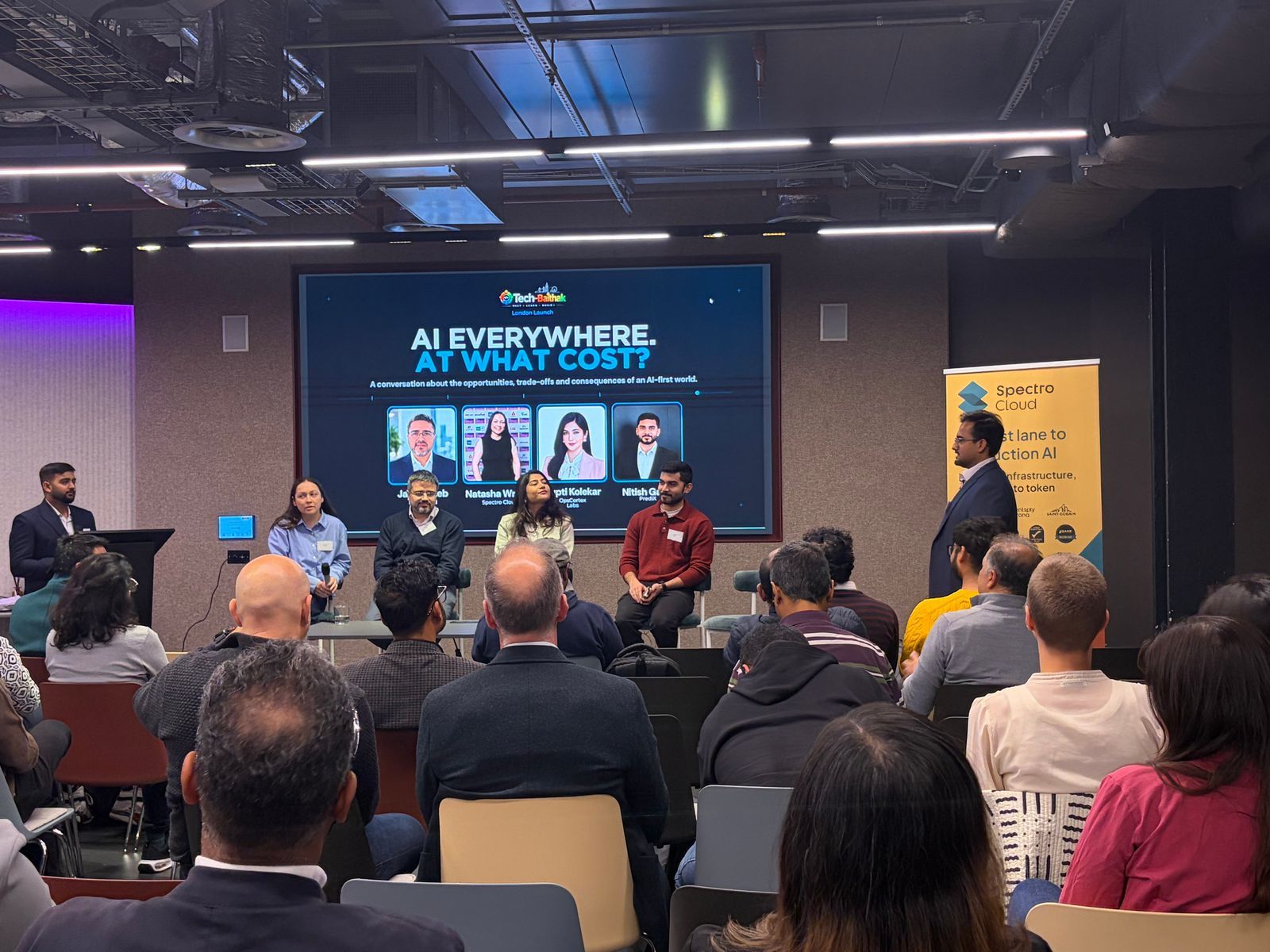
London is a natural place for us to spend our time building community. We've had UK-based staff since our early days, and in June we opened our first permanent UK office, in Paddington, where we're also hiring locally for R&D roles. You'll have seen us at KubeCon Europe in London, AWS Summit London and DPRTE, and we've hosted a roundtable for UK defense technology leaders. And we’re not done yet.
Next on the London calendar: on November 19, Natasha leads the London Tech Execs roundtable Bringing AI to the edge without the operational overhead, hosted by Prism Digital (by invitation).
And we’re sure this is just the start for this series, too. If you'd like to speak at a future Tech-Baithak or help out, find Yash, Harshit or Joydeep on LinkedIn.