
If you’ve taken a ride in a Waymo, you’ve already put your life in the hands of physical AI. Except, of course, there weren’t any actual hands.
There was a car. It had to do astonishingly difficult things to get you through traffic and deliver you to the right place, in one piece. Waymo says it gives about 500,000 paid rides a week. That’s a lot of people literally trusting their lives to an AI application and then, presumably, sitting doomscrolling on their phones like it’s the most normal thing in the world.
On the silver screen — since long before the days of Terminator, I, Robot, Ex Machina or my personal favorite The Mitchells vs. the Machines — an intelligent robot almost always gets a human-shaped body to help them take their shot at saving/destroying the world.
When we see a bipedal machine with a face, we immediately recognize what it is and feel the shiver of sci-fi potential… which helps explain the terrifying appeal of a Tesla Optimus or Boston Dynamics Atlas on a real keynote stage.
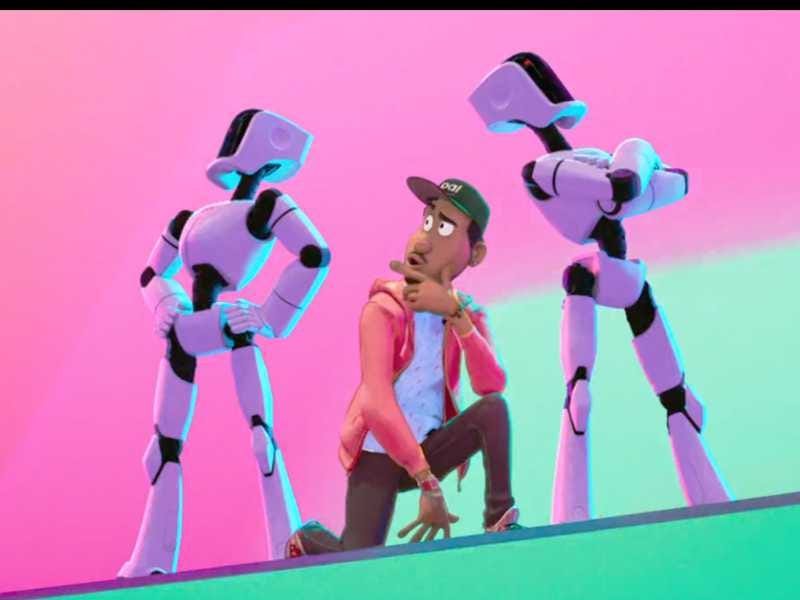
But the familiarity of the glossy white-and-black humanoid robot has encouraged a peculiarly distorted ideal of judging physical AI progress: we’re always waiting for a convincing mechanical person, while in reality machines that look nothing like us are already doing the real work.
A warehouse robot doesn’t need arms. A vision-guided agritech sprayer doesn’t need fingers. And if the job is inspecting a roof, why give the robot legs when it could simply fly?
We define physical AI as any equipment that uses learned models to perceive, decide and act in the world, whatever shape it takes. Building an affordable multipurpose humanoid robot would be an extraordinary way to act on the environment — but it certainly isn’t a prerequisite for a world filled with physical AI.
In fact, we expect much of the growth in physical AI to come through machines like these: specialized, often simpler and more robust equipment that becomes more capable as its perception and control improve.
Eighteen years down the mine
In April 2026, Komatsu announced it had commissioned its 1,000th autonomous ultra-class haul truck, a 930E-5AT with a 290-metric-ton payload, at Barrick’s Nevada Gold Mines. Customers using the company’s FrontRunner system had moved more than 11.5 billion metric tons of material since its commercial introduction in 2008.

Strictly, FrontRunner is a precedent for today’s physical AI more than an example of it. Its trucks were navigating with precision GPS and radar-and-laser obstacle detection long before anyone trained a robot foundation model: just like a giant version of the original Roomba, which found its way around with bump and cliff sensors rather than learned models. That doesn’t make FrontRunner less impressive. Moving an enormous load through an operating mine, repeatedly and safely, is precisely the kind of dangerous job we should be automating.
The mine also shows how much engineers can gain by strictly defining a known and knowable operating environment. They can design traffic procedures around a fleet and plan where vehicles operate. A Waymo has to cope with whatever turns up on the road. The mining system can be enormously valuable without ever acquiring the ability to deal with novel situations.
For a business deciding where to invest, a repetitive job in a manageable environment is the right place to start.
A forklift is a pretty good design
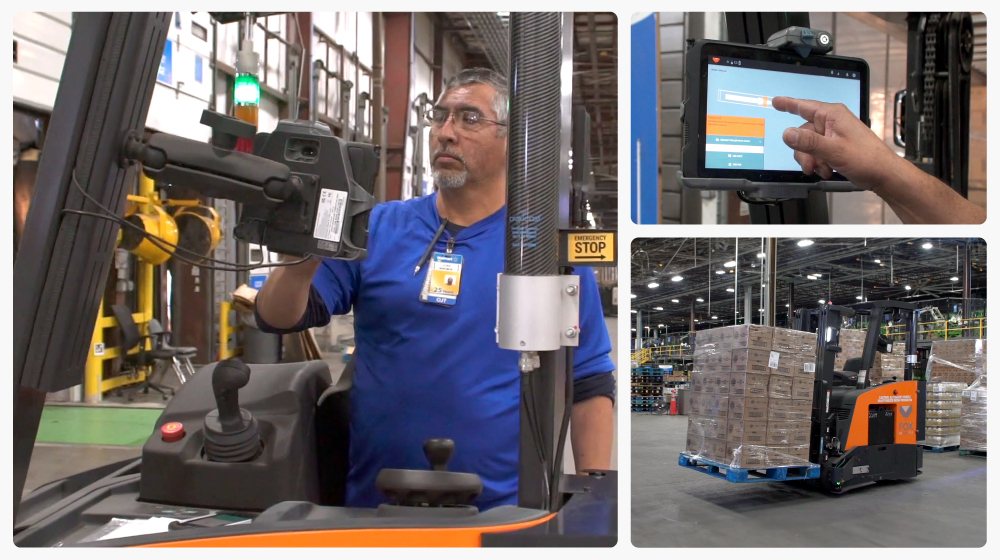
At Walmart’s distribution center in Brooksville, Florida, FoxBot autonomous forklifts used AI-powered machine vision and dynamic planning to unload pallets and carry them to an automated storage system.
This is distinctly not the sci-fi approach: there’s been no teaching a general-purpose humanoid to climb into a conventional forklift and operate its controls. Putting intelligence directly into the familiar forklift form-factor avoids a whole additional machine.
After a 16-month proof of concept, Walmart announced in April 2024 that it was rolling out 19 machines across four distribution centers.
But scaling has apparently been slow since. There’s been no public word of a bigger Walmart fleet, and when Symbotic bought Fox Robotics in February 2026, its CEO said most of Fox’s roughly 25 customers were still running pilots.
Other logistics operators have been more ambitious about scale, often in tandem with novel greenfield deployments. Amazon last year deployed its millionth robot, across more than 300 facilities. It has reimagined the way stock is held and moved: a self-contained world built to fit robots, not a robot inserted into traditional logistics. Ocado’s smart platform for supermarkets relies on a 3D storage grid that looks unlike a conventional warehouse. Ambition doesn’t guarantee payback, though. In November 2025, Kroger said it would close three of the eight automated warehouses it had built with Ocado, because order volumes couldn’t justify their fixed costs.
Three seasons of weed control
Agritech has been one sector enthusiastically adopting physical AI, literally out in the field, using the adaptability of AI models to handle the messy reality of fruit crops and weeds.
Researchers at the University of Arkansas System Division of Agriculture studied a prototype of John Deere’s See & Spray system over three soybean-growing seasons. Cameras and machine learning identified weeds so the equipment could apply herbicide selectively. In the trial, herbicide use was 43% to 59% lower than with broadcast spraying.
Aurea Imaging, a Dutch startup, also uses tractor-mounted computer vision in orchards, analyzing each tree in real time so spraying can be targeted. The company pitches it as a way to cut waste and raise yields.
From the roof to the kitchen floor
Some physical AI equipment is already operating much closer to home. Camera-equipped Roombas, including the j7, use object recognition to avoid hazards such as cords and pet waste. It’s a small domestic ambition (although anyone who’s contemplated the consequences of getting the second part wrong might disagree). It hasn’t been a lucrative one either: iRobot went through Chapter 11 in December 2025 and is now owned by Picea, its Chinese manufacturing partner.
Above ground, Skydio’s X10 drone uses computer vision and adaptive flight planning to capture inspection data under a human’s high-level direction. The pilot can specify the work while the aircraft handles parts of the flying. A robot needn’t be independent of every human decision to perform some of its work autonomously.
Each of these machines is shaped by its job. A low disc fits under furniture, a quadcopter reaches a roof, a sprayer is pulled behind a tractor. Engineers can spend their effort on the movement and perception the task needs.
Why a factory might pay for legs
Specialized machines are everywhere, but humanoids are making real progress too, and the most instructive example so far comes from a car plant.
At BMW’s Spartanburg plant in South Carolina, the assignment for Figure 02, a humanoid built by California startup Figure AI, was more Bruce Springsteen than Isaac Asimov: ten-hour shifts loading sheet-metal parts into welding fixtures.
During a ten-month pilot, the humanoid moved more than 90,000 components in roughly 1,250 operating hours and helped support production of more than 30,000 X3 SUVs, according to BMW.

BMW chose a body shop with extensive automation and teams accustomed to integrating new equipment. Production IT, safety and logistics staff were involved early. The robot could do its job because a great many people had already done theirs.
The company called it a pilot, and its February 2026 account didn’t publish a comparable cost per component or a human-intervention rate — so we can admire the work without pretending we know whether a humanoid was the cheapest way to do it. The hardware has already moved on. Figure began retiring the 02 in November 2025, BMW says it’s evaluating the Figure 03, and its first humanoid pilot in Germany, at Leipzig, uses Hexagon’s AEON instead.
While robot arms have been a fixture in auto factories since the last century, there is a credible reason to bring humanoids into the picture. Factories contain workspaces and tools already designed around people. A machine that can use them, then move between assignments, might avoid expensive brownfield facility reconstruction, or even any line downtime at all. But buyers have to weigh that flexibility against the cost of a complicated robot body. For a repetitive task at a fixed station, a conventional arm may be perfectly adequate.
At home, the ambition is more seductive. One biped to do the ironing, carry the laundry upstairs, load the dishwasher and clean the bathroom? We’d like that too. But unfortunately for our domestic bliss, these tasks ask far more of a robot than unloading another pallet in a familiar warehouse.
Who’s supervising the air fryer?
In its April 2026 account of π0.7, Physical Intelligence described a robot trying to cook a sweet potato in an unfamiliar air fryer. Left to itself, it made a reasonable attempt but didn’t finish after a few false starts. Step-by-step language coaching got it through, and PI then used that coaching to fine-tune the robot’s high-level policy until it could do the job without help.
As research, that’s encouraging, but as a household purchase, it’s a tougher sell. How much of dinner are we willing to spend supervising an expensive robot as it operates an appliance we already own? A domestic assistant will have to earn our trust to be left alone.
Nor does understanding all the steps involved in a task guarantee the ability to carry it out. DeepMind’s July 2026 Gemini Robotics 2 results included 92% success unscrewing a lightbulb, but only 36% screwing one in, in multi-finger tests on Apptronik’s Apollo 2 humanoid with SharpaWave hands.
DeepMind doesn’t explain the gap, beyond conceding that multi-finger dexterity “remains challenging”. Our guess is that screwing a bulb in demands alignment and contact pressure that unscrewing it doesn’t. But a one-in-three success rate at changing a lightbulb would get any janitor fired, human or robot.
Air fryers and lightbulbs might be challenging, but some enterprises have had more success in commercial kitchens (with robots that look nothing like chefs, incidentally).
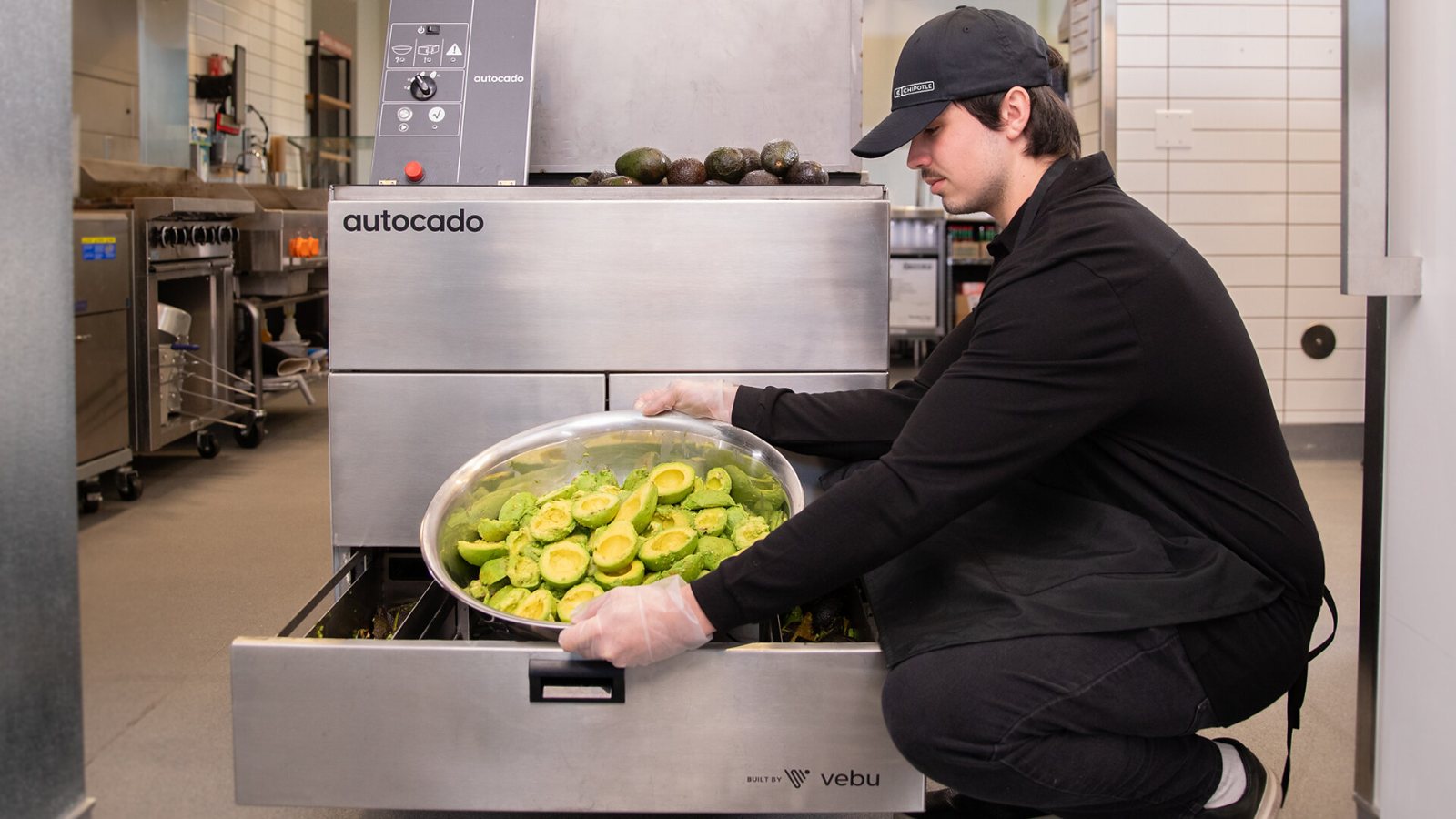
In September 2024, Spectro Cloud customer Chipotle moved two collaborative robots into restaurant tests in Southern California: Autocado, built with Vebu, which cuts, cores and peels an avocado every 26 seconds before staff mash it into guacamole, and an augmented makeline from Hyphen that assembles bowls and salads, which make up about 65% of Chipotle’s digital orders. Chipotle pitches them as a way to take the least popular prep work off its crews.
How physical AI gets built today
So far we’ve looked at where physical AI is already working and why the shape of the machine matters less than the humanoid hype suggests. For an enterprise deciding whether to build or buy, the next question is what separates a robot that works on an ordinary Tuesday from one that only works in the demo. Look past the body and there are four ingredients (none of them are a sweet potato).
Sensors that suit the job
Everything starts with what the machine can perceive. Waymo’s sixth-generation driver carries 13 cameras, four lidar units and six radar sensors, giving it overlapping views that pick out objects up to 500 meters away, at night and in bad weather. A mine truck on a planned route can get by with far less. The sensors set a ceiling on what any model can understand, and they decide what data the machine collects to improve the next model.
Models, plural, trained on the right data
Most working robots run several models, each at its own speed. Figure’s Helix, for example, pairs a vision-language model with seven billion parameters, which reads camera images, the robot’s hand and finger positions and a natural-language instruction seven to nine times a second, with a much smaller policy that turns that intent into finger, wrist and torso movements 200 times a second. Both run on GPUs inside the robot. The Certis inspection dog that AWS describes uses simpler parts in the same pattern: an object detector finds the target, a waypoint model plans the approach and a conventional controller does the steering. Installing the largest available model everywhere would be an expensive way to make some jobs harder.
Models of course are trained on data. Figure trained Helix on about 500 hours of teleoperated demonstrations. Certis fine-tuned its waypoint model on its own trajectory data, and Physical Intelligence turned its air-fryer coaching into training data. Training is expensive, particularly this kind of training, shadowing expensive experts. Generalist models should make this sunk cost more reusable: DeepMind ran one Gemini Robotics 2 checkpoint on three different robot configurations, and the Open X-Embodiment project has pooled more than a million robot trajectories from 22 types of robot. But a motion learned on one machine still has to suit the next one’s geometry, sensors and available force, so most deployments will still need fine-tuning for their own robot, site and job.
Hands that don’t break lightbulbs
The body has to deliver what the model intends. Motors, joints and grippers need the precision and force feedback to handle a lightbulb, a slippery bag or a sheet-metal part without dropping or crushing it. The SharpaWave hands on DeepMind’s Apollo test robot each have 22 degrees of freedom and more than 1,000 tactile sensing points per fingertip, and the robot still screwed in a bulb only 36% of the time. Touch sensing helps, but models and hardware have to improve together.
Reflexes that run locally
Between a model’s decisions, control loops running hundreds of times a second keep a grip steady and a robot upright. That needs fast, predictable compute on the machine itself, which is why robot makers keep pushing more of it on board. NVIDIA’s Jetson AGX Thor, launched in August 2025, offers up to 2,070 teraflops of AI compute at low (FP4) precision in a 130-watt module, and Boston Dynamics and Agility Robotics are among the humanoid makers planning to use it.
Training in the data center, inference on the machine
Those ingredients come together in different places. Training a robot model takes clusters of data center GPUs, plus simulation to generate practice that would be too slow, costly or dangerous to collect in the real world. Fine-tuning for a site or task might run in the cloud, on premises or both. Inference, the point where the model drives the machine, happens on the robot.
Tooling to stitch that pipeline together is starting to appear. NVIDIA’s open-source OSMO, for example, lets teams define training, simulation and hardware-in-the-loop testing as one workflow that runs across Kubernetes clusters in the cloud, on premises or air-gapped.
A model may be born in a data center, but it spends its working life on hundreds or thousands of machines in mines, fields and warehouses, usually far from an IT team. For anyone running a fleet, physical AI is edge AI.

Why the robot can’t wait for the cloud
When a load starts slipping from a gripper, sending a request to a distant service and waiting 100ms or more for the answer may be too slow. For time-sensitive perception and action, inference often needs to run on the machine or on nearby infrastructure whose delay can be controlled. A fast average response isn’t enough if an occasional long wait makes the movement unsafe.
Local execution also reduces dependence on a network connection, although a machine can operate offline only if its other essential dependencies are local too. And proximity alone doesn’t guarantee timing: controller scheduling and jitter still need engineering. Safety mechanisms must be designed and validated alongside the models.
Waymo provides a good working example. In a December 2025 engineering account, the company described training large teacher models and distilling them into smaller versions, including models optimized to run onboard. The driving system combines camera, lidar and radar information with driving-specific vision-language reasoning. A separate onboard layer validates the proposed trajectories.
Developers can use substantial computing resources for training and simulation, then deploy an efficient model close to the sensors. The car doesn’t have to carry all the computing power used to develop its driving ability. It does have to execute its part of the system in time.
That fits the seven-stop hybrid AI spectrum we’ve described before. Teams choose both the models they need and where to run them. Cloud services can support training and fleet analysis; a site’s servers can coordinate local work; onboard hardware can handle the immediate response. The split depends on the job, including its connectivity, privacy and cost constraints.
Who comes running when the robot stops?
One of the huge appeals of physical AI is that it runs autonomously, even continuously. But that doesn’t mean people are completely out of the picture — they just might be doing different jobs.
Amazon, which describes itself as the world’s largest manufacturer and operator of mobile robots, says the shift is already visible in its buildings. Since 2019 it has upskilled more than 700,000 employees, many to work with advanced technology, and its next-generation fulfillment center in Shreveport, Louisiana, needs 30% more people in reliability, maintenance and engineering roles.
Waymo describes its remote-assistance staff as providing contextual advice when requested by the driving system. They don’t drive the vehicles remotely, and the system can accept or reject their input. Sometimes that doesn’t produce the best outcomes, as San Francisco residents have observed.
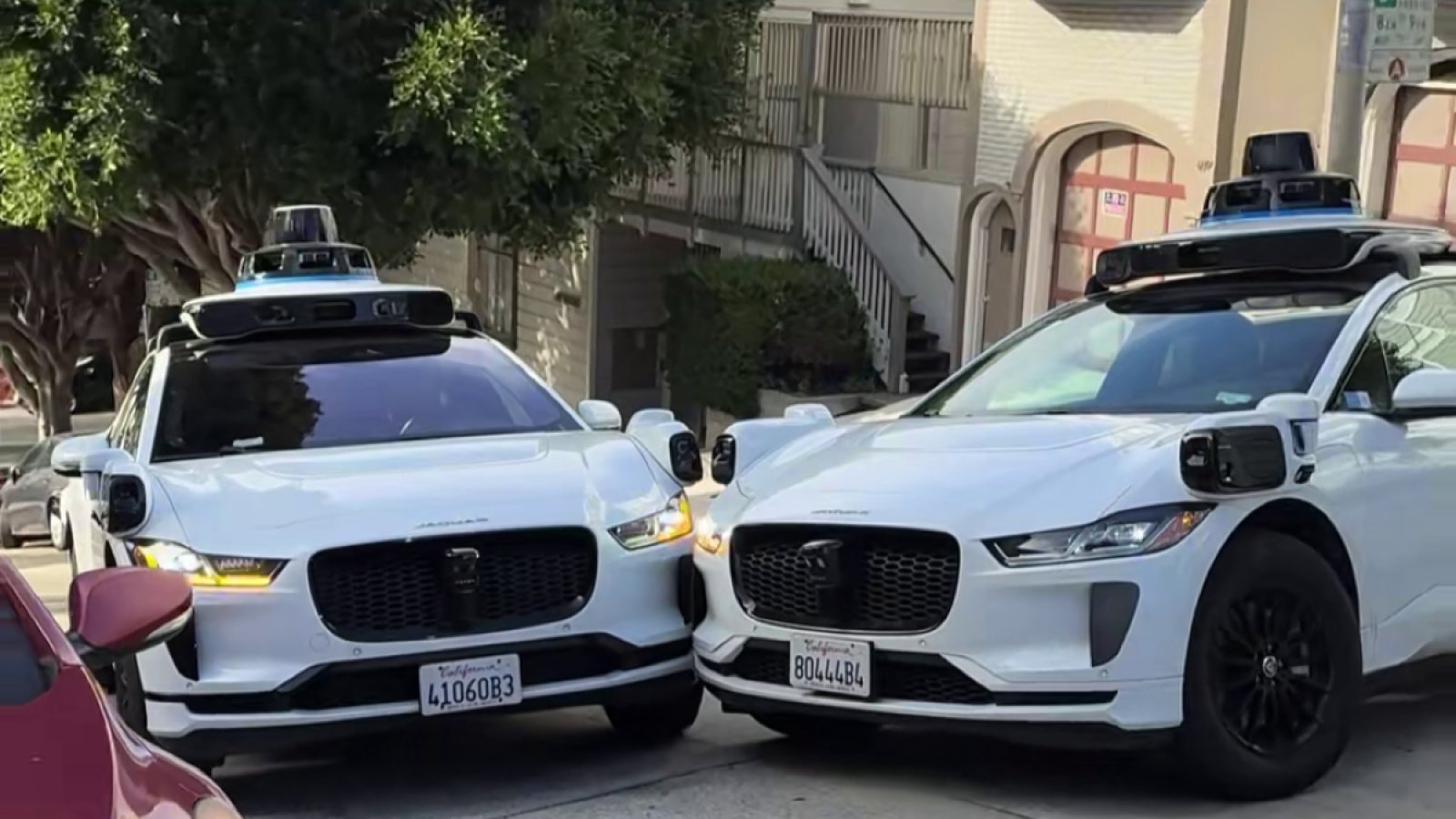
For a warehouse, an occasional unplanned human intervention may be easy to absorb. Multiply it across a busy fleet, however, and staffing becomes part of the economics. A robot that works beautifully while someone watches it has demonstrated a skill. Whether it saves anybody’s time remains an open question.
Someone will still have to clean the camera and inspect the gripper, and they’ll need the right spare part when it breaks. It’s possible to replace repetitive manual labor with better technical jobs; it’s also possible to leave a smaller crew chasing complex faults all shift long.
Whether you build or buy, it’s vital to rehearse failure before it happens instead of leaving it to the vendor’s support line. Decide what a safe stop looks like for each machine and who’s allowed to restart it. Keep enough trained people and manual equipment to run the process by hand for a shift. Work out how a stuck robot gets recovered, how long spare parts take to arrive, and whether the logs and sensor data from an incident will reach the people who can fix the model. And plan for the failures robots have and workers don’t: a dropped network, a bad model update or a compromised controller can stop every machine in a fleet at the same moment. The safety standards for your class of machine, such as ISO 10218 for industrial robots (revised in 2025 with new cybersecurity requirements) or ISO 3691-4 for driverless trucks and mobile robots, are an obvious place to start the checklist.
A new model every Monday
Once AI is deployed in machinery, updating it becomes an operational decision. A better perception model may change what the system detects, which can in turn change what it does next.
A fleet operator needs to know which combination of model, sensors and software is running on each machine. Engineers need a way to test changes under representative conditions and introduce them gradually, with a route back to a known configuration if performance worsens. Updating thousands of machines is also a question of maintenance windows and people available to respond. We’ve argued for years that edge fleets should treat everything from the operating system to the model as one versioned, immutable image, so every machine runs a known configuration and a bad update can be rolled back in one step. Physical AI fleets are no different.
Aurea, the orchard-spraying startup, deals with this on working tractors. At KubeCon + CloudNativeCon Europe in Amsterdam in March, Aurea engineer Jordan Karapanagiotis and Spectro Cloud’s Mauro Morales described how each tractor’s NVIDIA Jetson computer runs Kairos, an immutable Linux distribution for edge Kubernetes, and takes whole-image A/B updates, so a unit that can’t boot a new version falls back to the last one that worked. (Disclosure: Spectro Cloud is the lead sponsor of Kairos, a CNCF Sandbox project.)
We expect companies that can maintain reliable fleets with regular software stack iterations to have an advantage over companies that can only demonstrate a capable machine.
Who gets the gains?
Removing people from repetitive lifting and dangerous work in mines, warehouses or wheatfields is an appealing prospect. Whether their working day improves also depends on what employers do with the additional capacity that physical AI can unlock.
A 2025 study in ILR Review, which compared Amazon’s robotic and conventional fulfillment centers, associated robotics with roughly 40% fewer severe injuries, but 77% more nonsevere injuries. The researchers attributed part of the latter increase to faster work. Those are associations, but they complicate the assumption that automation improves every aspect of a job.
Amazon’s own figures look rosier. It reported that its global lost-time incident rate fell 70% between 2019 and 2025. But that’s self-reported and company-wide, and Amazon credits a mix of safer design, inspections, training and $2.5 billion of investment, with robots only one part of it. On recordable incidents, the measure Amazon leads with, the improvement was 43%.
A worker spared heavy lifting may welcome the machine and still worry about a faster pace, fewer colleagues or closer monitoring. The second worry has evidence behind it. In October 2025, The New York Times reported internal Amazon documents suggesting automation could let the company avoid hiring more than 600,000 US workers by 2033 while selling twice as many products. Amazon said the documents reflected one team’s perspective and didn’t represent its overall hiring strategy. Businesses have choices here. Savings can fund training and safer work, or simply a higher output target (and of course this applies to all AI discussions, not only physical AI).
The next ordinary day
For an enterprise developing or piloting a physical AI use case, the challenge is to follow it all the way through with a holistic perspective. How often does the task get completed acceptably? What happens to the exceptions? What does it cost once setup, supervision and maintenance are included? Compare the proposed robot with the equipment and workflow that would otherwise do the work.
Sometimes, as with BMW’s example, a humanoid will justify its complexity because the building, tools and changing assignments favor a human-shaped machine. In many other cases, we expect businesses to improve a forklift, fit better perception to an arm or send a drone where a person would struggle to reach. More adaptable models should widen those possibilities without making every machine resemble its owner.
We’re still in the early days of physical AI, and there’s plenty left to invent. For all the demos of robots performing tai chi or running obstacle courses, general-purpose dexterity remains difficult, and making physical AI affordable and dependable across suboptimal environments will take years of engineering. But the suggestion that we’re waiting for robots to enter the real world is getting harder to sustain. They’ve been hauling ore since before the current AI boom. People are already riding in them.
The passenger in a Waymo doesn’t judge the car a failure because it can’t also fold laundry. Getting across town safely, comfortably and on time is plenty to ask. If engineers can bring that degree of usefulness to more of the work around us, we’ll have ample reason to be impressed. We may also spend remarkably little time thinking about glossy white robots that look like us.